Does Liability Insurance Cover Theft of Vehicle? Everything You Need to Know
Discovering that your vehicle has been stolen is a stressful, overwhelming experience. Beyond filing a police report and figuring out temporary transportation, your immediate concern is likely financial: Will your auto insurance pay to replace or repair your stolen car?
The short answer depends on your policy type. A fundamental question many drivers ask is: “Does liability insurance cover theft of vehicle?”
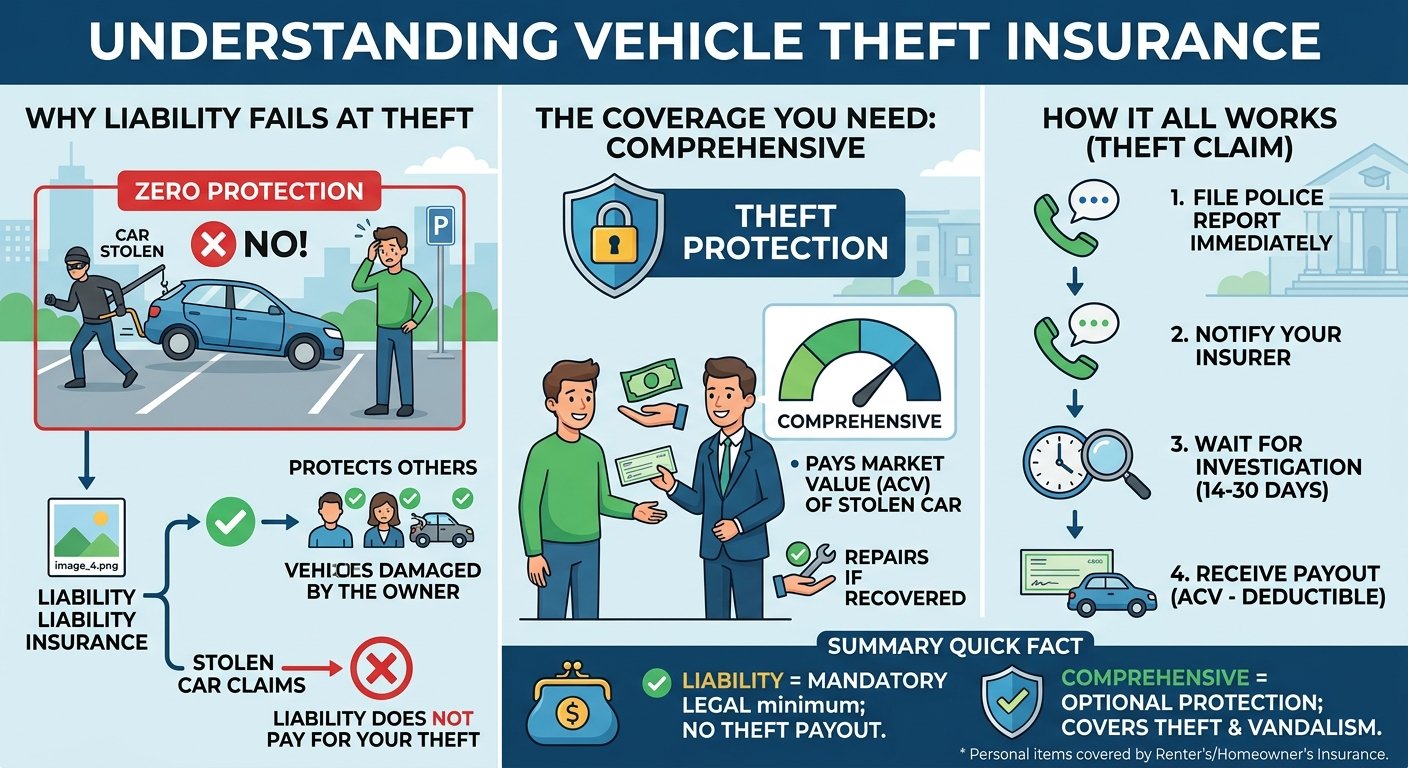
The direct answer is no—liability insurance does not cover vehicle theft.
This comprehensive guide breaks down why liability coverage falls short in theft situations, what type of insurance does cover stolen cars, how compensation works, and how to protect yourself financially.
Part 1: Why Doesn’t Liability Insurance Cover Theft?
To understand why theft isn’t covered, you need to understand the basic design and legal purpose of liability insurance.
                                 ┌── Bodily Injury Liability (Medical/Legal costs for OTHERS)
                                 │
Liability Insurance Coverage ────┤
                                 │
                                 └── Property Damage Liability (Vehicle/Property repairs for OTHERS)
The Purpose of Liability Insurance
Liability insurance is strictly designed to protect other people, not you or your vehicle. It is the minimum coverage required by law in almost every state and jurisdiction.
Liability insurance consists of two primary components:
- Bodily Injury Liability: Pays for medical bills, lost wages, and legal fees for other people injured in an accident where you are at fault.
- Property Damage Liability: Pays to repair or replace another person’s property (their car, fence, structure, etc.) if you cause an accident.
Key Takeaway
Because liability insurance only pays for damage or harm you cause to third parties, it provides zero financial protection for your own car, regardless of whether it is damaged in a crash, vandalized, or stolen.
Part 2: Which Insurance Policy Does Cover Theft?
If you want protection against vehicle theft, you need Comprehensive Coverage.
[Vehicle Stolen or Vandalized] ──► [Comprehensive Insurance Policy] ──► [Payout: Market Value Minus Deductible]
What Is Comprehensive Coverage?
Comprehensive insurance (often called “other-than-collision” coverage) protects your vehicle against non-accident-related events beyond your control.
| Event / Scenario | Covered by Liability Insurance? | Covered by Comprehensive Insurance? |
| Vehicle Theft | No | Yes |
| Stolen Personal Belongings Inside Car | No | No (Covered by Renters/Homeowners) |
| Vandalism / Broken Glass | No | Yes |
| Damage from Attempted Theft | No | Yes |
| Accident You Caused to Another Car | Yes | No (Covered by Liability/Collision) |
What Does Comprehensive Coverage Pay For During Theft?
If your car is stolen and you have comprehensive insurance, your provider will cover:
- Total Loss: The Actual Cash Value (ACV) of your vehicle if it is never recovered.
- Repairs: Fixes for any physical damage if the stolen car is eventually recovered (e.g., broken ignition, body damage).
- Rental Car Reimbursement: (If added to your policy) A temporary rental vehicle while the insurance claim is processed.
Part 3: Personal Belongings Stolen From the Vehicle
A common point of confusion for vehicle owners involves items left inside the car during a theft or break-in—such as laptops, phones, tools, or luggage.
Important Note: Neither liability insurance nor comprehensive car insurance covers personal belongings stolen from inside your car.
How to Cover Personal Items Inside Your Car:
- Renters Insurance: Protects personal property inside your vehicle anywhere in the world.
- Homeowners Insurance: Offers personal property coverage for items stolen from your car, subject to your policy limits and home insurance deductible.
Part 4: How Vehicle Theft Claims Work (Step-by-Step)
If your vehicle is stolen, follow this step-by-step procedure to ensure your claim is handled efficiently:
[1. File Police Report Immediately]
               │
               ▼
[2. Notify Your Insurance Provider]
               │
               ▼
[3. Provide Vehicle Information & Documentation]
               │
               ▼
[4. Wait Out the Investigation Window (Usually 14–30 Days)]
               │
               ▼
[5. Receive Actual Cash Value (ACV) Payout]
- File a Police Report: Call law enforcement immediately. Provide the car’s Make, Model, Year, Color, License Plate Number, and Vehicle Identification Number (VIN). Get a copy of the police report number.
- Contact Your Insurer: Inform your provider right away. You will need to share the police report number, key locations, and details about recent vehicle maintenance or mileage.
- Wait Out the Recovery Window: Insurance companies typically wait 14 to 30 days before declaring a stolen vehicle a total loss, giving law enforcement time to potentially recover it.
- Claim Settlement: If the car isn’t found, the insurer calculates the Actual Cash Value (ACV)—what the car was worth immediately before it was stolen—and issues a payout minus your chosen deductible.
Part 5: Key Terms to Know When Securing Anti-Theft Protection
- Actual Cash Value (ACV): The market value of your vehicle accounting for age, mileage, and depreciation, not the original purchase price.
- Deductible: The amount you pay out of pocket before insurance covers the rest (e.g., if ACV is $15,000 and your deductible is $500, your payout is $14,500).
- GAP Insurance: If your stolen car is leased or financed, GAP insurance covers the “gap” between the car’s ACV payout and the higher amount you still owe on your loan.
Summary Checklist
- Liability Insurance: Protects others in an accident; does NOT cover car theft.
- Comprehensive Insurance: Required if you want full financial protection against vehicle theft, break-ins, and vandalism.
- Personal Belongings: Covered by Renters or Homeowners Insurance, not auto policies.
- Financed/Leased Vehicles: Lenders almost always require you to carry comprehensive coverage alongside mandatory liability.